Guides
Every section we cover, with the explainers that go with it.
After the generation
Model
-
 Frame interpolation and smoother motion
Frame interpolation smooths generated video but treats subject drift and limb mutation as real motion—amplifying the very artefacts you want to hide.
Frame interpolation and smoother motion
Frame interpolation smooths generated video but treats subject drift and limb mutation as real motion—amplifying the very artefacts you want to hide.
-
 Upscaling generated video
AI upscalers can fix soft generated video—but they also amplify latent-space flicker and hallucinate detail that was never in the source image.
Upscaling generated video
AI upscalers can fix soft generated video—but they also amplify latent-space flicker and hallucinate detail that was never in the source image.
Choosing between them
Model
-
 Runway compared with Pika
Runway Gen-3 Alpha and Pika 2.0 offer fundamentally different control surfaces for image-to-video: director-mode camera rigs versus region-mask selective animation.
Runway compared with Pika
Runway Gen-3 Alpha and Pika 2.0 offer fundamentally different control surfaces for image-to-video: director-mode camera rigs versus region-mask selective animation.
-
 Veo compared with Kling
Google Veo 2 and Kling 1..6 compared on motion fidelity, prompt adherence, clip length, audio, and access paths—with dated evidence and the caveat that the answer moves.
Veo compared with Kling
Google Veo 2 and Kling 1..6 compared on motion fidelity, prompt adherence, clip length, audio, and access paths—with dated evidence and the caveat that the answer moves.
Free and local
Model
-
 The open-weights models worth your time
Stable Video Diffusion, LTX-Video, and Wan 2.1 are the open-weights image-to-video models worth your time. Here are their licences, VRAM needs, and what they produce.
The open-weights models worth your time
Stable Video Diffusion, LTX-Video, and Wan 2.1 are the open-weights image-to-video models worth your time. Here are their licences, VRAM needs, and what they produce.
-
 What the free tiers actually allow
Free tiers come with watermarks, resolution caps, deprioritised queues, and commercial-use restrictions. Here is what each provider's terms actually say, dated and sourced.
What the free tiers actually allow
Free tiers come with watermarks, resolution caps, deprioritised queues, and commercial-use restrictions. Here is what each provider's terms actually say, dated and sourced.
Prompting for motion
Model
-
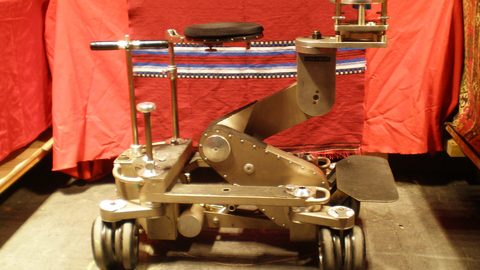 Camera moves and how to ask for them
The camera-motion terms—dolly, pan, orbit, crane, push-in—that image-to-video models interpret, and which models offer discrete camera controls versus text-prompt interpretation.
Camera moves and how to ask for them
The camera-motion terms—dolly, pan, orbit, crane, push-in—that image-to-video models interpret, and which models offer discrete camera controls versus text-prompt interpretation.
-
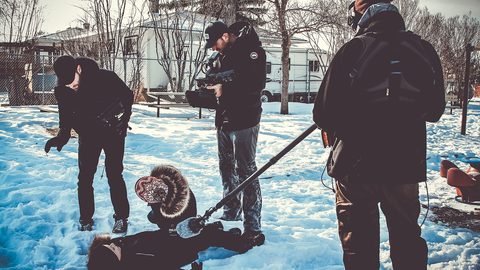 How to structure an image-to-video prompt
A fixed five-element image-to-video prompt template—subject, motion, camera, lighting, duration—and why the order determines what the model actually animates.
How to structure an image-to-video prompt
A fixed five-element image-to-video prompt template—subject, motion, camera, lighting, duration—and why the order determines what the model actually animates.
Rights, rules and disclosure
Model
-
 Using generated video commercially
Which image-to-video models and tiers permit commercial use, and the specific conditions for client work, resale, and platform monetisation.
Using generated video commercially
Which image-to-video models and tiers permit commercial use, and the specific conditions for client work, resale, and platform monetisation.
-
 Who owns a generated video
Who legally owns AI-generated video output under US, UK, and EU copyright law, and what each major model's terms of service say about ownership.
Who owns a generated video
Who legally owns AI-generated video output under US, UK, and EU copyright law, and what each major model's terms of service say about ownership.
Shot recipes
Model
-
 A product turntable from one photograph
How to animate a product turntable spin from one photo, with the source-image rules, prompt, and diagnosis of label warping and reflective surface failures.
A product turntable from one photograph
How to animate a product turntable spin from one photo, with the source-image rules, prompt, and diagnosis of label warping and reflective surface failures.
-
 The earth zoom-out shot
How to generate an orbital earth zoom-out from a still image, with the source requirements, prompt, and diagnosis of the seam and parallax failures that expose the shot.
The earth zoom-out shot
How to generate an orbital earth zoom-out from a still image, with the source requirements, prompt, and diagnosis of the seam and parallax failures that expose the shot.
The models
Model
-
 Google Veo
 2 accepts a still image and generates video with high motion fidelity through VideoFX and Vertex AI. Every capability claim dated against Google DeepMind documentation.
Google Veo
Google Veo 2 accepts a still image and generates video with high motion fidelity through VideoFX and Vertex AI. Every capability claim dated against Google DeepMind documentation.
-
 Kling
Kling 1.6 adds start-and-end-frame specification to image-to-video generation, accessed through Kuaishou's platform. Every capability dated, queue times explained, failure modes documented.
Kling
Kling 1.6 adds start-and-end-frame specification to image-to-video generation, accessed through Kuaishou's platform. Every capability dated, queue times explained, failure modes documented.
-
 Runway Gen-4
 exposes director-mode camera controls—pan, tilt, zoom, roll, dolly, truck—for image-to-video generation. Every capability dated, credit model explained, failure modes documented.
Runway Gen-4
Runway Gen-4 exposes director-mode camera controls—pan, tilt, zoom, roll, dolly, truck—for image-to-video generation. Every capability dated, credit model explained, failure modes documented.
The source image
Model
-
 Composing a still that can move
How to compose a still image with headroom, depth cues, and foreground separation so an image-to-video model has space to generate convincing motion.
Composing a still that can move
How to compose a still image with headroom, depth cues, and foreground separation so an image-to-video model has space to generate convincing motion.
-
 Resolution and aspect ratio
What resolution and aspect ratio each image-to-video model expects, and the distortion and softening artefacts that appear when the source image does not match.
Resolution and aspect ratio
What resolution and aspect ratio each image-to-video model expects, and the distortion and softening artefacts that appear when the source image does not match.